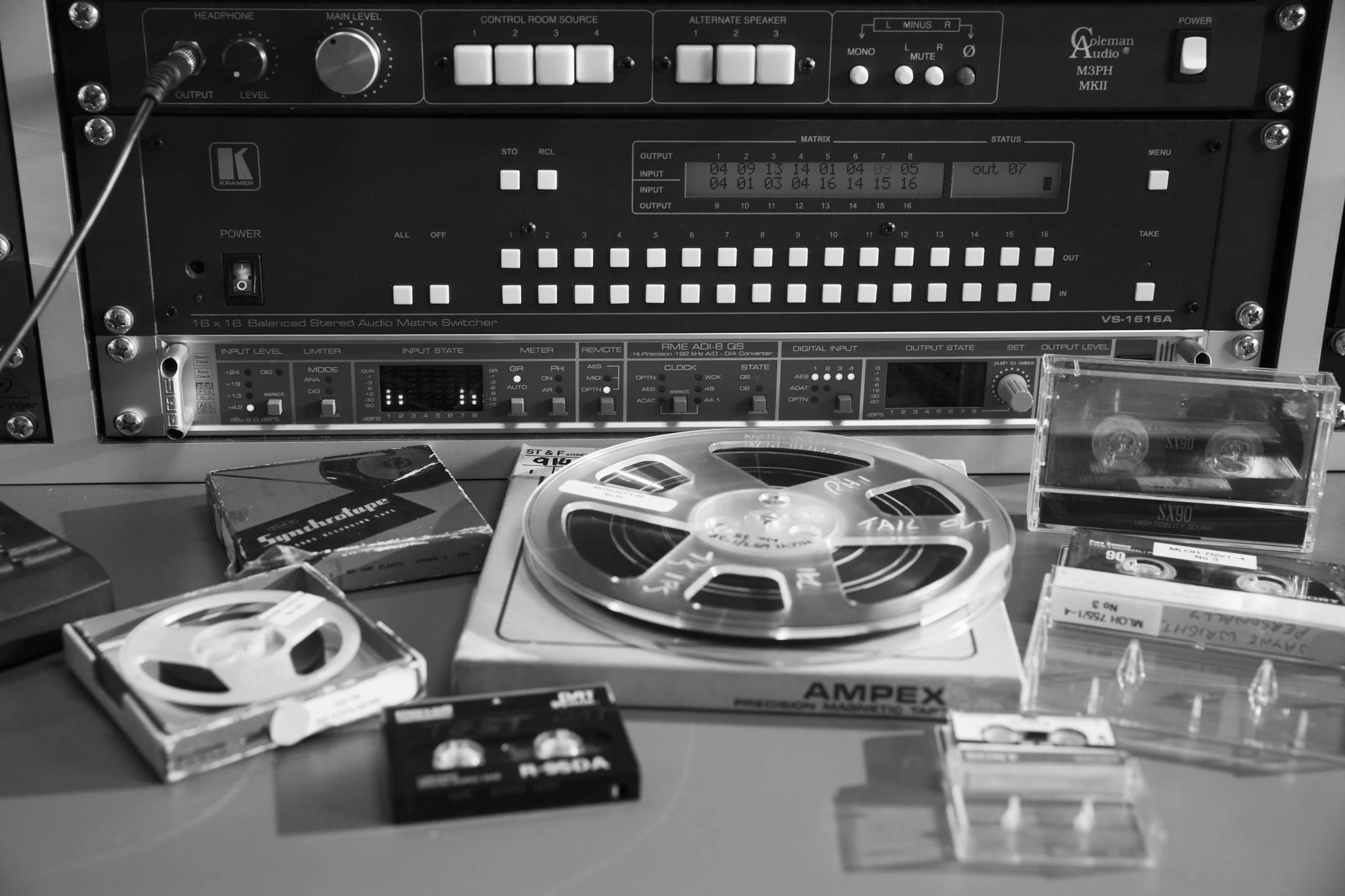
Local and community archives hold rare and irreplaceable audio assets, yet their preservation for future generations can be a challenge. In the past, integrating audio archives into a digital asset management system was hampered by compatibility and cost, particularly with ageing analogue formats. Now, with scalable, cost-effective, and interoperable Audiovisual Asset Management and Preservation System (AVAMS) solutions, community archives have a viable path forward to digitally preserve, manage, and share their audio heritage. While AVAMS technology is not new, recent innovations have enabled heritage organisations maintaining audiovisual content to adopt a record management solution that provides both asset management and audio preservation.
Defining the Problem
Local, community and regional archives hold vast amounts of valuable audio assets. Many of these collections are held in superseded analogue formats, and much of this material is inaccessible. The challenge of managing these collections is two-fold: on the one hand, there is a requirement to preserve and digitise the material, on the other, to integrate audio documents with their records and metadata into a unified asset management system.

Until recently, heritage organisations housing audiovisual material kept these collections in separate databases to their main collections. Recent innovations in this field have made it possible to integrate preservation, digitisation, and management into a central record keeping database.
What is an AVAMS?
An Audiovisual Asset Management and Preservation System (AVAMS) is a type of Digital Asset Management System (DAMS) designed to hold audiovisual documents, records, and metadata. While DAMS are used extensively in record and information management, AVAMS are specifically employed in the media, cultural, and heritage sectors among organisations managing large amounts of audiovisual material in their workflows, for example, media agencies, or in archives and libraries.
AVAMS technology can be used to administer audiovisual archives by streamlining the management and preservation of vast amounts of audiovisual content. AVAMS technology does this by handling organisation, storage, and retrieval with expanded and integrated capacities for descriptive metadata tagging, access control, workflow management, and interoperability with client-side discovery layers.
The complexity of managing audiovisual content has generally meant that multiple technological solutions or “layers” are deployed simultaneously to handle metadata, access, workflow, and interface with client-side servers as shown in Figure 1 below. While archives generally require five or six layers, audiovisual content requires up to twelve layers, with several of these used to manage metadata alone. AVAMS technology addresses these complexities by integrating acquisition, accessioning, preservation, storage, metadata, reporting, and access into an integrated platform.

Transitioning from Analogue
Community organisations hold tangible cultural heritage in many formats. Data published in the Australian Society of Archivists’ (ASA) Directory of Archives in Australia suggests over two thirds of cultural heritage organisations in the community sector hold audio archives of enduring value, with an equally high number of those organisations retaining audio archives only in their original analogue format.

Analogue material can be held in multiple formats including compact cassette, magnetic tape, open reel, and microcassette. Retaining these items only in their original form poses risks of data loss. In addition to becoming inaccessible due to format and equipment obsolescence, these items are susceptible to mould, deterioration and breakage of the fragile cellulose fibres, and “vinegar syndrome”, an irreversible shrinkage of the tape affecting acetate-based media.
The preservation of materials in such a wide variety of formats also poses questions of interoperability and the costs of moving to an integrated system. In most cases, three separate databases have been required to house (1) the audiovisual record, (2) the descriptive data attached to the audiovisual record, and (3) the archival record. While most organisations use DAMSs to manage their collections, records for digitised and born-digital audio items are generally not integrated into the main collections due to interoperability issues, and analogue items are at risk of being lost due to degradation and obsolescence. A case study of the implementation of a Digital Asset Management System at Museum Victoria (Broomfield 2009) prior to the current innovations in AVAMS demonstrates the difficulties of maintaining an integrated approach when multiple systems are required to manage the same set of assets.
Smart Solutions for Sound Heritage
The development of new asset management technologies capable of effectively integrating audiovisual material has arisen directly from the needs of heritage, media, and cultural organisations. Recent innovations in AVAMS technology offers local and community organisations opportunities to preserve their valuable audio archives and safely integrate their archival collections. Given the variety of audio materials managed by heritage organisations and the geographical location and distribution and of these materials, there is no one-size-fits-all solution, but rather, integrated systems that can be adapted to deliver sustainable long-term audio archiving and records management.
Figure 2 below summarises some of the key considerations for organisations when choosing between custom-built, proprietary and open source options.

From proprietary systems to accessible options
Public institutions like the British Broadcasting Corporation (BBC), the Australian Broadcasting Corporation (ABC), National Geographic, the National Film and Sound Archives of Australia (NFSA), and the National Archives of Australia (NAA) have commissioned custom-made solutions, with ensuing technological advances leading to the development of proprietary software now available to the wider heritage community. For example, TransMedia Dynamics’ MediaFlex-UMS was initially developed for and successfully adopted by the National Film and Sound Archives (NFSA), prior to being repurposed for the National Archives of Australia. Out of this innovation, TransMedia Dynamics developed the scalable Paragon for Archiving that can be implemented by smaller organisations with an upgrade to Media-Flex-UMS offered as needed.
Parallel developments in open-source AVAMS solutions based on Samvera’s digital repository have also made significant contributions to the wide-scale deployment and improvement of these technologies and led to the creation of several free and ready-to-use packages like Avalon, Hyrax, and Hyku. The Samvera platform offers open-source software components to build repository layers for managing digital and non-digital assets. Among its users are Indiana University, which developed the Avalon platform, the Digital Public Library of America, which developed Hyku, and WGBH, a Boston-based public broadcaster which developed AMS2.0 in conjunction with the Library of Congress Davis. These advances demonstrate that open-source solutions have limitations and require adaptation and compromise that may amount to greater and ongoing time investment.
Adapting for the community sector
Investment in AVAMS technology among local and community organisations presents many long-term benefits with demonstrated efficiencies in preservation and care, organisation, storage, and access. Let’s take a look at some of the main opportunities and challenges of AVAMS adoption, summarised in Figure 3 below.

Opportunities for growth and sustainability
By far the greatest benefit of adopting AVAMS technology is the efficient preservation and organisation of audio content into an integrated system that can categorise items with multiple layers of descriptive metadata, thereby boosting accessibility, collaboration, and workflows. The long-term gains of an integrated asset management system ensures the secure storage and retrieval of valuable audio assets into the future. The scalability of the system also safeguards growth over time.
The adoption of AVAMS technologies by heritage organisations could ensure significant gains in securing and preserving the future of tangible cultural heritage. Benefits include the long-term preservation of valuable audio archives, integrated and streamlined management of audio assets, metadata and records, significant reductions in retrieval times, increased access to the collections, potential of a new revenue streams for online access to archival items.
Implementation and cost challenges
The primary challenge to the implementation of AVAMS technologies lies in how the question of digitisation and the subsequent physical storage of analogue data is resolved by individual organisations. The needs and requirements of each organisation have to be reviewed on a case by case basis. As each organisation holds various analogue items, individual assessments will be required to determine how to undertake the digitisation process, and whether the analogue audio materials will be retained in their original format following digitisation and what storage and access policies will apply. A determination will need to be made to ensure that the retention requirements of the original documents are met under state and federal laws (Commonwealth of Australia, 1983; State Records Authority of NSW, 1998). Ultimately, and given the scalability of the software solutions, future digital storage challenges are also likely to arise and should be considered prior to implementation.

The implementation of AVAMS technologies can amount to significant financial costs for initial investment if a custom-built solution is sought. Licensable products and open-source solutions offer alternatives which may prove more cost-effective in the short-term, however, these may require additional resources to adapt and maintain which may not be sustainable in the long-term. To offset these costs, the adoption of an integrated AVAMS technology invites the possibility of an untapped revenue stream for community archives making items accessible online.
Future-Proofing Our Cultural Memory
The projected 2756% increase in global data production between 2025 and 2035 (see Figure 4) underscores the urgency for sustainable digital preservation strategies in the heritage sector. As AVAMS technologies become indispensable for managing and safeguarding audiovisual archives, their adoption will also contribute to the exponential growth of global data. This presents a dual challenge: ensuring long-term preservation while addressing the environmental impact, rising storage costs, and digital obsolescence risks. For community archives, the financial, technical, and training barriers to implementing AVAMS must be carefully considered, along with data governance concerns such as privacy, cultural sensitivity, and intellectual property rights. To be truly sustainable, future AVAMS innovations will need to prioritize energy efficiency, interoperability with archival standards, and accessible open-source options that support both large institutions and small community organisations alike.

Suggestions for further reading
Ashworth, C. (2020). Deadline 2025: The race to futureproof our audiovisual collection. National Archives of Australia Blog. https://www.naa.gov.au/blog/deadline-2025-race-future-proof-our-audiovisual-collection
Baker, S., & Cantillon, Z. (2020). Safeguarding Australia’s community heritage sector: A consideration of the institutional wellbeing of volunteer-managed galleries, libraries, archives, museums and historical societies. Australian Historical Studies. 51(1), 70-87.
Broomfield, J. (2009). Digital asset management case study – Museum Victoria. Journal of Digital Asset Management. 5(3), 116–125. https://doi.org/10.1057/dam.2009.4
Cariani, K., & Green, R. (2020). Building open source audiovisual collections management systems on Samvera. Journal of Digital Media Management. 9(1), 40-50.
Daly, R. & Organ, M. (2014). Embed and engage! Delivering a digitisation program at the University of Wollongong Library. The Australian Library Journal. 63(3), 220–237. https://doi.org/10.1080/00049670.2014.932680
Davis Kaufman, C., Cariani, K., Roosa, S., Corum, J. and Myers, A. (2019). Implementing Samvera Open Source Technology at WGBH and the American Archive of Public Broadcasting Association of Moving Image Archivists.
https://www.slideshare.net/WGBH_Archives/implementing -samvera-open-source-technology-at-wgbh-and-the -american-archive-of-public-broadcasting
Dingwall, D. (2020, October 27). National Archives to spend $3 million on saving at-risk audio and video recordings. The Canberra Times. https://www.canberratimes.com.au/story/6986502/national-archives-to-spend-3-million-on-saving-at-risk-audio-and-video-recordings/
Eagle, K. (2012). Digital Archiving Practices in Audiovisual Archives: an exploration of the use of media asset management systems in television broadcasting organizations. (Doctoral dissertation, Open Access Te Herenga Waka-Victoria University of Wellington).
Ellis, S. (2021). Sound in the Archive: Media Materials as Archives of Narrative. Art libraries journal. 46(3), 78-98.
Halls, B. (2020). Best of the Box: Australia’s audio and visual past to be digitised. Nine News. https://9now.nine.com.au/a-current-affair/australian-media-history-to-be-digitised-after-years-in-national-film-and-sound-archive-storage/ebf27ec0-a457-4dcc-bfb8-9612f00df5d7
Müller, J. (2020). Digital transformation at media archives: Ten steps to becoming digital by design. Journal of Digital Media Management. 8(4), 321-339.
Müller, J., & Meichtry, Y. (2022). The first heritage video stored on DNA: A case study on the future of digital storage. Journal of Digital Media Management (London). 11(2), 161–170.
National Library of Australia (NLA). (n.d.). Preserving Australia’s documentary heritage: a starter kit for community groups. https://www.nla.gov.au/sites/default/files/starterkitcommunity.pdf
Pretto, N., Russo, A., Bressan, F., Burini, V., Roda, A., & Canazza, S. (2020, June). Active preservation of analogue audio documents: A summary of the last seven years of digitization at CSC. In Proceedings of the 17th Sound and Music Computing Conference, SMC20 (pp. 394-398).
Rakemane, D., & Mosweu, O. (2021). Challenges of managing and preserving audio-visual archives in archival institutions in Sub Saharan Africa: a literature review. Collection and Curation, 40(2), 42-50.
Rodrigues, J.C. (2022). Business models for the digital transformation of audiovisual archives. International Journal of Entrepreneurial Behavior & Research, 28(8), 1975-1999.
Schüller, D. (2020). Audiovisual Documents and the Digital Age. The UNESCO Memory of the World Programme: Key Aspects and Recent Developments, 203-217.
State Library of NSW. (2024a). Amplify. https://amplify.gov.au/
State Library of NSW (2024b). Digital Practice Guidelines for Public Libraries.
https://www.sl.nsw.gov.au/public-library-services/content/digital-practice-guidelines-public-libraries-0
State Library of NSW (2024c). Oral History and Sound Collections. https://guides.sl.nsw.gov.au/oral-history-sound
State Library of NSW. (2024d). Sound Recordings.
https://www.sl.nsw.gov.au/public-library-services/sound-recordings
State Records Authority of NSW (1998). State Records Act 1998. https://staterecords.nsw.gov.au/recordkeeping/guidance-and-resources/about-the-state-records-act-1998
TransMedia Dynamics (TMD). (2021). Paragon for Archiving. https://www.tmd.tv/wp-content/uploads//SOLUTION-BRIEF_Paragon-for-Archiving_A4.pdf
TransMedia Dynamics (TMD). (2020). Case studies: National Archives of Australia Audiovisual Asset Management and Preservation System(AVAMS). https://www.tmd.tv/project/national-archives-of-australia-case-study/ 3/8
Walker, L. (2021). The audible and the inaudible in a post-digitised world: Preserving both sound and object. Journal of Digital Media Management, 10(1), 81-89.


