What exactly are archives? Laura Millar (2004) reminds us that archives are “defined not by their form but by their purpose”. An archive isn’t simply a stack of yellowing papers or a digital hard drive, it is evidence, preserved because it documents actions, decisions, and relationships. Millar charts a path from data to knowledge to information to evidence. Only when something becomes evidence does it truly become archival.
Archives can also be seen as “houses of living memory”, protecting our right to a connection with the past (Jean-Pierre Wallot cited in Terry Cook, 1997, “What is past is prologue”). Falling under UNESCO’s broader category of “documentary heritage”, archives (and other documents of cultural significance) have an “enduring value to a community, a culture, a country or to humanity generally, and whose deterioration or loss would be a harmful impoverishment.”
The qualities of archival evidence
Millar emphasises that archives derive their value from being documentary evidence which depends on content, context, and structure. For evidence to endure, it must be static, unique, and authentic. These qualities sound technical, yet they’re profoundly cultural: authenticity connects to trust, uniqueness to narrative, and stability to accountability. Archives are selective and contingent, shaped by historical circumstances and decisions, and as such they are rarely complete. In his Theory and Practice of Digital Preservation, Trevor Owens notes, “Nothing has been preserved, there are only things being preserved.”
Millar highlights the concepts of partial and lost archives: records may be missing, destroyed, or never created, meaning that what survives is always a fragment of the whole story. These complexities set the stage for thinking about archives more critically. As Jacques Derrida argued in Archive Fever, archives are not neutral repositories, but driven by the human instinct to remember, and to forget. Walid Raad’s project The Atlas Group illustrates this vividly. By creating fictional documents about the Lebanese Civil War, Raad blurs the line between evidence and invention, exposing how archives can appear authoritative even when they are fabricated.
The lived experience of archives
Archives are not only about preserving evidence, they are also tangible sites of memory and history. As Arlette Farge argues in The Allure of the Archives, archival documents are reference points we can’t ignore, but they do not simply “articulate” the truth, they “produce” it through the rigorous processing of historians. Arlette writes that the task of writing history stands at the intersection of personal, communal and institutional decisions, and the impossible task of assembling an “objective” compilation of facts based on these subjective decisions.
For historians, writes Arlette Farge in The Allure of the Archives (2013), the preservation of archival records creates “a space of captured speech” that becomes a vantage point from which new forms of knowledge can be brought to light. But, historians must recognise that “the validity of the knowledge depends on the validity of the purpose,” (Edward Hallett Catr, 1961, cited in Arlette). This is where “revisionist” histories, often expressed as official or national histories, falter, because they sever the link between lived experience and evidence that begins in the archives, and historical writing.
Mapping archival institutions today
Millar (2004) identifies a wide range of archival institutions, each shaped by purpose and scope. Institutional archives collect records for a specific government or non-government agency, while hybrid archives serve an agency but also hold non-agency collections. Often this hybrid role develops over time as the institution acquires non-agency records. Collecting archives focus on assembling materials for research use, while community archives may hold institutional, hybrid, or collecting forms but are defined by their local character.
Museum archives often combine blend institutional, collecting, and community roles. Some institutions are integrated, bringing libraries, museums, and archives together under the umbrella of “memory institutions.” Indigenous archives extend this integration further: their holdings may include not only records or books but also artefacts such as animal bones, hunting tools, clothing, film footage, or sound recordings of songs. Activist archives, which emerged as counter-institutions to the mainstream, acquire collections with a particular social or political agenda, though some have later become part of established institutions, such as the ONE archives in California.
The digital landscape has also expanded archival forms. Online repositories like the Internet Archive, inspired by activist approaches, seek to bring evidence and documentary heritage into public view. Millar distinguishes these repositories from trusted digital repositories, which apply archival standards and best practices to preserve authenticity, context, and structure. Trusted repositories may be centralised and agency-managed, decentralised and run by third parties, or networked and cooperative, sharing responsibility for electronic records across institutions. They also often bridge institutional types and agendas. The Slave Societies Digital Archives, for example, a project designed to preserve decaying paper documents about enslaved people, applies archival standards to its digitisation processes. However, its purpose and scope also evoke indigenous and activist archival practices.
Digitisation, Indigenous Data Sovereignty, and the Right of Reply
New archival practices are showing how preservation is inseparable from justice. In Canada, the Miiyupimatisiiun Research Data Archives Project works with the Whapmagoostui First Nation to return photos, recordings, and transcripts collected in earlier research, guided by OCAP® principles of Ownership, Control, Access, and Possession. In Australia, the Indigenous Archives Collective works to ensure that Indigenous voices can correct, challenge, or expand what the records say. Together, these examples show how archives are becoming spaces where memory, accountability, and community agency meet.
The Greek State Archives and the Legacy of Asia Minor
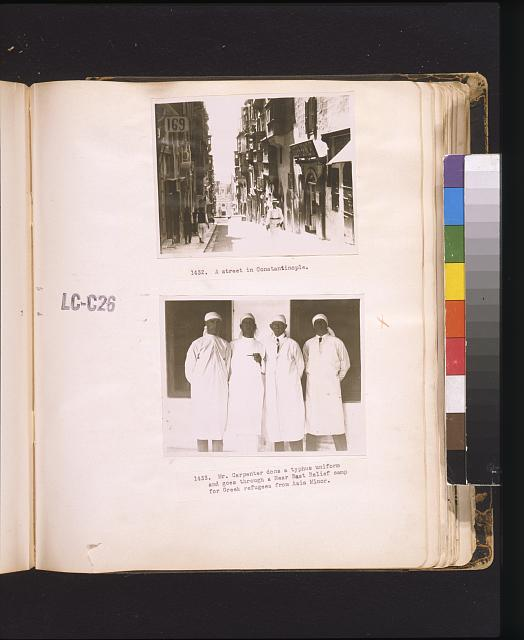
Archives also matter in moments of displacement and rupture. In Greece, institutions such as the General State Archives (GAK) preserve records about Greeks in Turkey before 1922. These documents trace the forced population exchanges after the fall of the Ottoman Empire. These archives are more than bureaucratic remnants; they are repositories of memory for families and communities fractured by political violence. They show how archives serve as both legal evidence of rights and losses, and as cultural anchors for displaced identities.
The Greek-Turkish population exchange of 1923, formalized by the Treaty of Lausanne, led to the displacement of over a million people, profoundly impacting both nations. The United Nations archives house countless folders of documents related to these events in their
Refugees from Asia Minor subseries. In Greece, the legacy of this event is preserved through various archival institutions that house records documenting the lives, properties, and experiences of the Greek communities from Asia Minor.

General State Archives, Greece.
Archival Institutions and Their Holdings
1. General State Archives of Greece (GAK)
The GAK serves as the central repository for documents related to the administration of the Greek state. Its holding on Greeks in Asia minor are contained in its Exchange File Archives (Αρχείο του τέως Ταμείου Ανταλλαξίμων) and include:
- Refugee Registers: These documents list individuals who were relocated from Asia Minor to Greece, detailing their origins, destinations, and compensation for lost properties. The collection consists of approximately 540,000 records, including names of refugees, their places of origin, and compensation details.
- Property Deeds and Compensation Files: Records pertaining to the properties left behind in Turkey and the compensation claims filed by the refugees.
- Community and Ecclesiastical Records: The GAK holds a significant collection of documents from Greek communities in Asia Minor, dating from the 17th to the early 20th century. These include:
- Codices and Firmans: Official documents issued by Ottoman authorities.
- Veratia: Letters of privilege granted to communities.
- Patriarchal Letters: Correspondence from the Ecumenical Patriarchate.
- Baptism and Marriage Certificates: Religious records documenting personal milestones.
- Property Titles and Documents from Educational Institutions and Hospitals: Legal and institutional records providing insights into community life and infrastructure.
These records were brought to Greece by displaced populations and are now preserved at the GAK, offering invaluable insights into the administrative and social structures of the Greek communities in Asia Minor.
2. Hellenic Parliament Library
This Hellenic Parliament Archives holds:
- Legislative Records: Documents related to the laws and policies enacted to accommodate the influx of refugees, including land distribution and settlement programs.
- Personal Papers: Correspondence and diaries of politicians and officials involved in the resettlement process.
These archival records play a crucial role in preserving the collective memory of the Greek communities affected by the population exchange. They not only document the administrative aspects of resettlement but also capture the personal stories and cultural heritage of the refugees. By maintaining and providing access to these records, Greek archival institutions ensure that the history of Asia Minor Hellenism continues to be remembered and studied by future generations.
Archives in Australia
Australia’s archival landscape reflects this dual role of accountability and memory. The National Archives of Australia preserves federal government records, including migration files, defence records, and Cabinet papers. The State Archives and Records Authority of New South Wales holds colonial convict records, land grants, and court proceedings, while its state counterparts maintain regional equivalents. Collecting institutions like the National Library of Australia house personal papers, oral histories, and ephemera. Meanwhile, digital platforms like Trove have expanded public access to newspapers, photographs, and records—making archives part of everyday research, family history, and cultural identity.
Together, these perspectives complicate the idea that archives are simply evidence. They remind us that archives also embody values, identities, and struggles. For Millar, their evidential role is paramount; for Farge, their allure lies in fragments of human life; for Piggott, they are entangled with Australian traditions of recordkeeping; and for Derrida, they are bound up with power, desire, and forgetting. So, A Is for Archives—but also for authenticity, accountability, activism, and access. Whether in a government vault, a community centre, an Indigenous knowledge space, or a digital repository, archives remind us that memory is both evidence of the past and a resource for the future.


